Business Cordless Voice Platform • Uganda
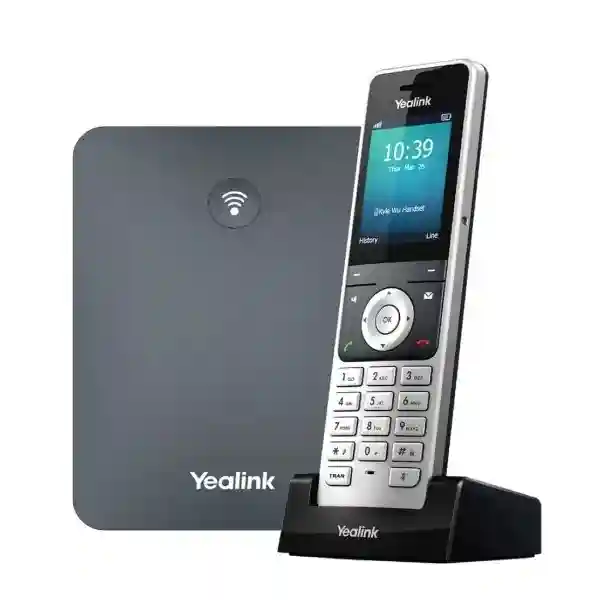
Yealink W76P DECT Phone System for Business SIP Mobility
The Yealink W76P is a business DECT IP phone system combining the W70B IP base station with a W56H cordless handset. Its role is straightforward: connect SIP-based business telephony to cordless users who need to move through an office, shop floor, reception area, clinic, warehouse, hotel back office or similar workspace while remaining reachable on their business extension. Rather than extending Ethernet to every handset position, the base joins the IP network while compatible cordless endpoints communicate over DECT radio.
For procurement teams, the W76P is most useful when mobility, call capacity and manageable expansion matter more than a fixed desk telephone at every seat. The W70B supports up to ten compatible Yealink DECT handsets or supported DECT endpoints, up to ten SIP accounts and up to twenty simultaneous calls. Each W56H can handle up to two simultaneous calls. This architecture lets a small deployment begin with the supplied handset and grow by adding compatible endpoints, subject to the base capacity, radio coverage, call-path design and PBX licensing.
The handset provides a 2.4-inch 240 × 320 colour display, illuminated keypad, full-duplex speakerphone, 3.5 mm headset connection and business call controls. Under ideal conditions, W56H versions provide up to 30 hours of talk time, while standby rating varies by hardware version. Quick charging can provide approximately two hours of talk time from a ten-minute charge under stated conditions. The base supports Ethernet, PoE, VLAN, SIP, secure transport and automated provisioning mechanisms. These characteristics make the system particularly relevant where staff move between rooms or work zones but still require controlled enterprise voice identities.
A sound purchase decision should consider the building before counting handsets. Walls, reinforced concrete, shelving, machinery, floor separation and radio interference can reduce practical coverage below laboratory or ideal-condition figures. Yealink states nominal coverage up to 50 metres indoors and 300 metres outdoors in ideal conditions. Site layout therefore determines whether one base is sufficient or whether supported repeaters or a different multi-cell design should be considered. FourTeck can help translate user count, extension plan, PBX environment, PoE availability and coverage zones into a bill of materials.
Instant Specifications & Procurement Fact Rail
W70B base + W56H handset
Up to 10 handsets / 10 SIP accounts
Up to 20 simultaneous calls
1 × 10/100M RJ45; IEEE 802.3af PoE Class 1
Request current Uganda availability and commercial quotation
Confirm regional warranty terms on quotation
The procurement fact rail should be read as a capacity boundary rather than an assumption that every installation will use the maximum figures. Twenty simultaneous calls are base-level capability, while extension entitlements, SIP trunks, PBX capacity, codecs, network quality and provider policies can independently constrain real-world calling. Similarly, DECT radio coverage is environmental. For this reason, a professional quotation should identify the number of active users, expected concurrent calls, physical zones, base placement, available switch ports, PoE status, PBX or hosted voice service, and accessories. Warranty duration, local stock position, lead time and firmware baseline should be confirmed on the commercial offer because those items can vary by supply batch and channel.
Operational Product Architecture & Overview
The W76P separates the IP network edge from the mobile user. The W70B base station is the bridge between the Ethernet/SIP environment and the DECT radio domain. It registers SIP identities to the organisation’s PBX or compatible hosted voice platform, handles signalling and media functions, and provides the radio connection used by registered handsets. This is materially different from Wi-Fi calling handsets that share the enterprise wireless LAN. DECT creates a purpose-oriented cordless voice layer, which can simplify voice mobility where a dedicated cordless architecture is preferred.
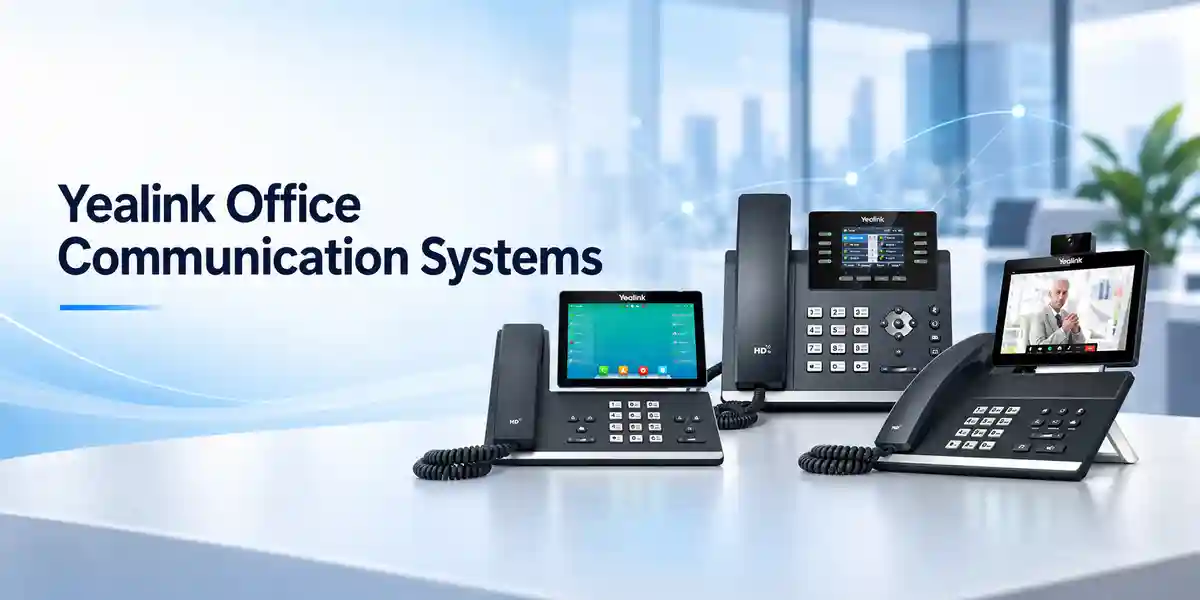
At the handset layer, the W56H presents familiar telephony functions including call hold, transfer, call waiting, three-way conference, mute, do-not-disturb, call forwarding, caller identification, voicemail indication and directory access. The base can store a substantial local phonebook and can work with remote directory mechanisms depending on platform integration. For mobile employees, the operational advantage is that the extension follows the handset through the supported radio area rather than tying the user to a particular desk.
The W70B’s Ethernet interface is 10/100 Mbps, which is entirely adequate for its voice role and should not be confused with a pass-through desktop switch. The base has one RJ45 interface, so network planners should reserve a switch port at the intended mounting position. IEEE 802.3af PoE Class 1 support can eliminate a local mains adapter for the base when the connected switch provides compatible PoE. The supplied handset charger still requires its appropriate power arrangement. Where PoE is unavailable, the supported external adapter provides an alternative for the base.
Voice quality depends on the entire path. The system supports wideband G.722 and multiple narrowband codecs, plus audio processing functions intended to improve conversation quality. VLAN and Layer-2 priority support allow voice traffic to be segmented and prioritised when the surrounding switching environment is configured accordingly. Administrators should still validate WAN latency, jitter, packet loss, QoS treatment, SIP traversal and upstream provider behaviour. A premium endpoint cannot compensate for a congested or poorly designed network.
Provisioning is another important architectural layer. The platform supports configuration through browser, phone and automated provisioning methods, with protocols including TFTP, FTP, HTTP and HTTPS and support for Yealink RPS workflows. This matters for organisations deploying several sites because standard templates can reduce repetitive configuration. Administrators can also use logging and trace export for troubleshooting. Firmware governance should be treated as a controlled operational process: establish an approved version, validate interoperability with the PBX, schedule upgrades, keep configuration backups where appropriate and document rollback procedures.
Security controls include TLS for signalling, SRTP for protected media where supported end-to-end, HTTPS, digest authentication, encrypted configuration options and role-based configuration levels. These capabilities are valuable only when the PBX, service provider and configuration policy use compatible settings. Procurement should therefore include a security compatibility check rather than assuming that the presence of a protocol automatically means it is active.
The most significant compatibility caveat is the DECT ecosystem itself. Yealink states that its DECT technology is not compatible with third-party DECT base stations or handsets. Buyers replacing a mixed-brand cordless system should not assume generic DECT interoperability. Inventory the current handsets, repeaters and bases, then verify each proposed endpoint against the W70B compatibility list before ordering.
Enterprise Business Outcomes & Value Analysis
Key Hardware & Software Highlights
| Component / Capability | Technical Role | Operational Outcome |
|---|---|---|
| W70B base | SIP-to-DECT platform supporting up to 10 endpoints and 20 calls | Central radio and voice anchor for a mobile team |
| W56H handset | 2.4-inch colour display, speakerphone, headset jack | Portable business extension with familiar call controls |
| PoE Class 1 | Base power over compatible Ethernet infrastructure | Fewer local power dependencies at the base mounting point |
| G.722 and narrowband codecs | Voice encoding choices | Interoperability and wideband voice potential when supported end-to-end |
| TLS / SRTP / HTTPS | Signalling, media and management protection mechanisms | Supports stronger enterprise voice security policies |
| RPS and auto-provisioning | Remote deployment and configuration workflow | Reduced repetitive setup effort for multi-device rollouts |
The hardware and software features should be selected as a system rather than as isolated specifications. For example, PoE is valuable only when a compatible switch port is available where radio placement is best. Similarly, secure SIP features require compatible server-side configuration, and automated provisioning requires a controlled provisioning source. The best deployment therefore begins with an infrastructure survey and an agreed configuration standard.
Technical Specifications Ledger
| Category | Confirmed Specification | Procurement Note |
|---|---|---|
| System composition | W70B base + W56H handset + charger and package accessories | Confirm exact regional pack contents on quotation |
| Handsets | Up to 10 compatible DECT endpoints | Verify endpoint compatibility before mixing models |
| SIP accounts | Up to 10 | PBX licences/service accounts may be separate |
| Simultaneous calls | Up to 20; up to 2 per W56H handset | Check SIP trunk concurrency |
| Display | 2.4-inch 240 × 320 colour display | Designed for handset menus and caller information |
| Ethernet | 1 × RJ45 10/100M | Reserve one network switch port |
| PoE | IEEE 802.3af, Class 1 | Validate PoE budget and switch standard |
| Base adapter | AC 100–240 V input; DC 5 V/600 mA output | Use supported power accessories |
| DECT range | Up to 50 m indoors / 300 m outdoors in ideal conditions | Actual range varies by building and interference |
| Repeaters | Up to 6 RT30 per base | Design coverage before ordering |
| Audio | G.722; optional AMR-WB; PCMU, PCMA, G.726, G.729/G.729A, iLBC; full-duplex speakerphone | Codec availability must align with PBX/provider |
| Network protocols | SIP v1/v2, VLAN 802.1Q/802.1P, 802.1X, LLDP, STUN, UDP/TCP/TLS, DHCP/static | Check enterprise NAC and VLAN policy |
| Security | TLS, HTTPS, SRTP, digest authentication, AES-protected configuration, SHA family support | Enable compatible controls on both endpoint and server |
| W56H talk time | Up to 30 hours in ideal conditions | Battery age and usage affect runtime |
| Standby | Up to 400 h on V0–V3; up to 350 h on V4, ideal conditions | Confirm handset hardware revision if material |
| Handset dimensions | 175 × 53 × 20.3 mm | Useful for holster and storage planning |
| Base dimensions | 130 × 100 × 25.1 mm | Desktop or wall placement |
| Humidity | 10–95% | Indoor business equipment; avoid unsuitable exposure |
| Handset operating temperature | 0°C to 40°C | Assess hot warehouses and outdoor work carefully |
| Base operating temperature | -10°C to +45°C | Keep within specified environment |
Specifications represent platform capabilities and ideal-condition ratings published for the W76P family. Environmental limits and radio range should be interpreted conservatively. A site with concrete cores, metal shelving, lifts, plant rooms or multiple floors may require testing or alternative topology. Equally, PBX features such as shared lines, directories and special call controls depend on the server implementation. Confirm the intended telephony platform during quotation so configuration expectations are explicit.
Configuration & Sizing Worksheet
Step 1 — Estimate users and workload
Count named users, shared duty handsets and spare devices separately. Record how many calls may occur at the busiest time, not merely the total number of employees. A ten-user department may need fewer than ten handsets if devices are shared by role, while a smaller team may require additional spares for shift continuity. Compare busy-hour demand with the W70B limit of twenty simultaneous calls and the two-call-per-handset capability, then verify SIP trunk channels and PBX licences.
Step 2 — Draw the coverage map
Mark the intended base position, work zones, stairwells, stock rooms, reception, offices and external areas. Note reinforced walls, metal partitions, racking and machinery. The nominal 50-metre indoor figure is not a promise of coverage through every obstruction. Place the base centrally where practical and near network infrastructure. If edge zones are uncertain, include a site survey or test unit in the deployment plan rather than buying solely from floor-plan dimensions.
Step 3 — Validate network and power
Reserve a 10/100 Ethernet switch port and determine whether it supplies IEEE 802.3af PoE. Check voice VLAN configuration, DHCP scope, DNS, NTP, firewall policy, SIP traversal and QoS. If PoE is used, document switch power budget and UPS coverage. If the external adapter is used, identify a reliable mains point. The handset charging cradle requires its own supported charging arrangement and should be positioned where users naturally return devices.
Step 4 — Confirm platform integration
Identify the PBX or hosted SIP service, firmware requirements, registrar, outbound proxy, authentication model, codec policy, DTMF method, voicemail behaviour and directory integration. Confirm whether the provider has a tested W70B/W76P profile. Features such as secure signalling, encrypted media, shared call appearance or remote directories depend on compatible server-side support.
Step 5 — Build the quote checklist
Provide the required W76P starter systems, additional compatible handsets, repeaters if validated, spare charging accessories, headset requirements, provisioning service, delivery destination and desired support scope. Include whether FourTeck should stage extensions before shipment. Ask the quotation to state stock or lead time, warranty basis, commercial validity, taxes where applicable and any separately licensed PBX or carrier services. This converts a device request into a deployable procurement package.
Deployment Scenarios & Industry Use Cases
Large Enterprise and Multi-Site Networks
Within a large organisation, W76P systems can serve specific departments or branches that need cordless voice rather than acting as a universal campus radio architecture. A branch standard might define one W70B per suitable coverage zone, a controlled set of compatible handsets, voice VLAN policy, secure provisioning and a common firmware baseline. Central IT can maintain templates while local teams receive pre-labelled devices. For very large or roaming-intensive sites, validate whether a multi-cell DECT architecture is more appropriate than independent single-base systems.
Financial and Banking Institutions
Banks and financial offices may use cordless extensions for operations staff who move between controlled internal areas. Procurement should emphasise secure SIP configuration, protected provisioning, network segmentation, access control, logging and change management. Handsets should be assigned and inventoried, and radio coverage should be intentionally limited to operational requirements. The device’s TLS/SRTP capabilities provide useful building blocks, but institutional security teams should validate cryptographic settings, certificate practices and PBX compatibility against internal policy.
Educational and Campus Environments
Schools, colleges and training centres can deploy cordless phones for administration, facilities, security desks, libraries or departmental support. The W76P is particularly suited to bounded buildings or zones where users need mobility without relying on personal mobile phones. Campus procurement should map each building independently, account for concrete construction and consider power continuity at network switches. Directory planning is also valuable so staff can reach extensions quickly without maintaining separate contact lists on each handset.
Government and Public-Sector Procurement
Public-sector projects often require documented specifications, bill-of-materials consistency, serial-number control, formal quotations and delivery acceptance. The W76P can be specified by exact model and component composition, with compatible accessories listed separately. Tender documents should distinguish manufacturer capabilities from project-specific requirements, especially warranty period, installation scope, configuration, training and response times. Where communications security policies are stringent, the purchasing authority should validate the complete SIP environment rather than approving endpoints in isolation.
Retail, Hospitality, Clinics and Warehousing
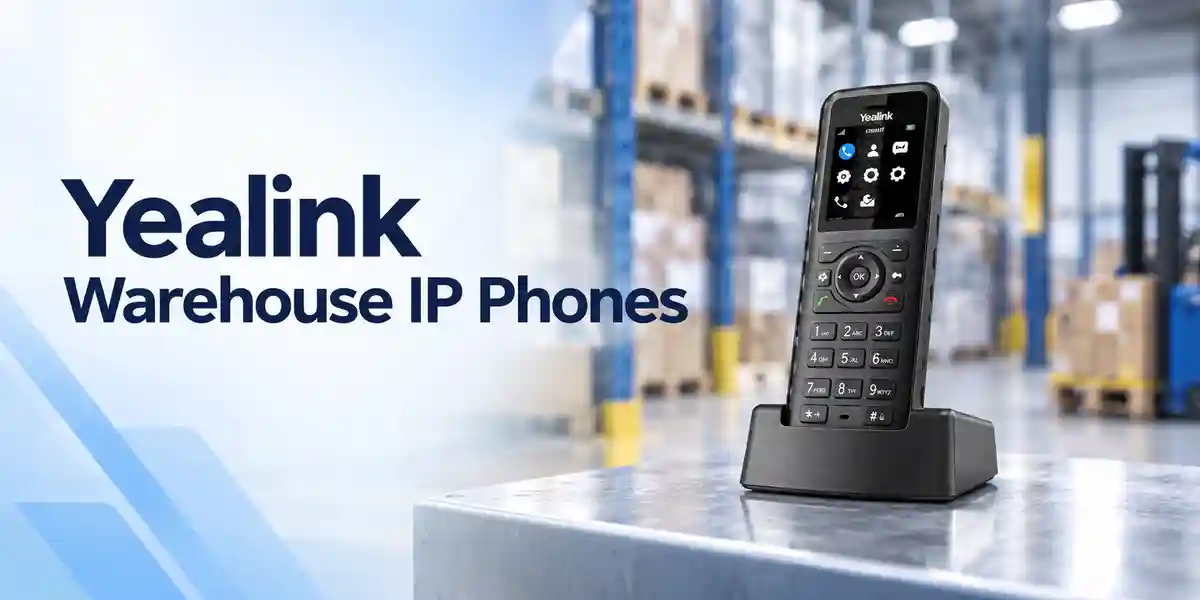
These environments share a common operational pattern: staff move. A store supervisor may cross the sales floor, a hotel employee may move between back-office zones, a clinic administrator may need to leave reception, and a warehouse coordinator may work between dispatch and inventory areas. A cordless business extension keeps those roles reachable. However, dense shelving, cold rooms, elevators and reinforced service areas can challenge radio coverage, making a pre-deployment assessment especially important in industrial and hospitality buildings.
Technical Deep Dive 1: Processing, Voice and Radio Architecture
The W70B is designed around the relatively specialised workload of business voice rather than general-purpose packet switching. It terminates the Ethernet connection, maintains SIP registrations, processes call signalling and voice streams, and coordinates DECT endpoint sessions. Supporting up to twenty simultaneous calls across up to ten SIP accounts gives the base a defined concurrency envelope. This is useful for procurement because sizing can be expressed in calls, endpoints and coverage rather than vague performance language.
Audio processing spans wideband and narrowband codecs. G.722 enables wideband voice where the PBX and remote path support it, while common narrowband codecs preserve compatibility with established SIP services. Packet-loss concealment, adaptive jitter handling and related audio functions are designed to maintain usable conversations under imperfect network conditions, although they should not be treated as substitutes for sound LAN/WAN engineering. QoS, adequate bandwidth and stable latency remain essential.
DECT radio separates handset mobility from the Wi-Fi data plane. That separation can reduce contention with user WLAN traffic and provides a purpose-built cordless experience. Yet radio physics remain decisive: construction materials, floor slabs, reflective surfaces and interference influence coverage. The published range figures are ideal-condition maximums. A technical design should therefore treat coverage as a measured property of the site, not a fixed circle on a drawing.
Technical Deep Dive 2: Software Ecosystem, Firmware Security & Operational Control
Configuration can be performed through the device interface and web management, but the larger operational benefit comes from automated provisioning. HTTP/HTTPS and other supported provisioning methods can distribute standard configuration, while RPS can support remote onboarding workflows. An organisation with multiple units can define a template for SIP server, VLAN, time settings, codecs and feature policy, then apply controlled variations such as extension credentials.
Firmware should be governed like other infrastructure software. Before broad rollout, test a candidate release against the actual PBX, SIP trunk, directory service and network access controls. Record the approved version, maintenance window and rollback procedure. Security capabilities such as TLS, SRTP, HTTPS and encrypted configuration should be enabled consistently with server support. Strong administrator credentials and restricted management access are fundamental because endpoint security is partly a configuration discipline.
Operational control also includes observability. Trace packages and system logs can support troubleshooting when registration, audio or provisioning problems occur. Support teams should record MAC addresses, serial numbers, assigned extensions and physical locations. This inventory makes replacements and incident handling faster, particularly across branch networks where the technician diagnosing a problem may not be on site.
Technical Deep Dive 3: Availability, Redundancy & Recovery
A W76P deployment is only one component in the availability chain. The handset depends on its battery and radio link; the base depends on power and Ethernet; the switch depends on power and uplinks; the SIP service depends on LAN/WAN reachability and server availability. High availability therefore starts by mapping these dependencies. Using PoE from a UPS-backed switch can keep the base powered during short mains interruptions, while charged handsets retain local battery power.
The W70B supports outbound proxy backup, which can contribute to resilient registration designs when the voice platform provides compatible primary and secondary paths. That does not automatically create disaster recovery. Administrators should test failover, DNS behaviour, firewall rules, emergency calling policy and restoration procedures. Configuration backups or reproducible provisioning templates reduce recovery time if a base must be replaced.
For hardware continuity, organisations with critical operations may keep a spare handset, charger, battery or base according to site importance and replacement lead time. A documented spare is more useful than an unconfigured device: label it, maintain compatible firmware and preserve a provisioning method. This approach turns availability from a product claim into an operational process with clear dependencies and recovery steps.
Pre-Purchase Buyer Gap Checklist
Are there hidden licences? The handset/base hardware itself provides the stated endpoint capacity, but the surrounding PBX, hosted voice platform, SIP trunk, directory service or management platform may have separate subscriptions or extension licences. Request a quotation that clearly separates hardware from recurring services.
Can existing third-party DECT handsets be reused? Do not assume so. Yealink explicitly states its DECT technology is not compatible with third-party DECT base stations or handsets. If an existing site has another cordless brand, plan for verified Yealink-compatible endpoints rather than relying on generic DECT branding.
Will one base cover the entire building? Possibly, but floor area alone cannot answer this. Ideal-condition range is up to 50 metres indoors, while walls and metal structures reduce it. Large, multi-floor or obstruction-heavy sites should be surveyed. Repeaters can extend suitable deployments, but some sites are better served by a multi-cell architecture.
Does PoE power everything? PoE can power the W70B base through its Ethernet port. The cordless handset is battery powered and uses its charging cradle, which has its own power requirement. Include charger locations in the electrical plan.
What about full-load power draw? The base is IEEE 802.3af Class 1 and also supports a 5 V/600 mA external adapter. For switch planning, use the PoE class and the switch manufacturer’s budgeting method rather than estimating from average idle behaviour.
Will every PBX feature work? Core SIP interoperability is broad, but advanced features depend on the PBX or service provider. Verify provisioning templates, secure transport, shared lines, directories, voicemail signalling and any platform-specific features before committing to a large rollout.
What handset revision will arrive? W56H battery construction and published standby rating differ by hardware version. If a particular revision is contractually important, put that requirement on the quotation rather than assuming a version from an older datasheet.
Is it suitable for outdoor or harsh industrial use? The W56H is a business handset with specified operating temperature and humidity limits; it is not presented here as a ruggedised outdoor handset. For drops, dust, moisture or harsh environments, ask about compatible rugged Yealink DECT endpoint options and validate environmental ratings.
How should spares be planned? Consider the business cost of downtime and delivery lead time. Critical sites may justify spare batteries, chargers, handsets or a base. Keep spares inventoried and on an approved firmware/configuration path so replacement is rapid.
Uganda Procurement & Delivery Logistics
FourTeck Uganda can structure a W76P quotation around the actual deployment rather than simply listing a starter kit. A useful request identifies the number of cordless users, branch or building location, PBX or hosted voice service, desired extensions, expected call concurrency, PoE switch availability, coverage area, repeater expectations, headset needs and any staging requirement. This information allows the bill of materials to distinguish starter systems from additional handsets and accessories.
After commercial confirmation, order processing can include model and quantity verification, accessory checks and agreed configuration services. Delivery timing depends on current stock, order quantity, destination and supply-chain conditions, so the formal quotation should be treated as the authoritative source for lead time. For projects with a fixed opening date, tender deadline or branch rollout schedule, communicate the required date early enough to accommodate sourcing, staging and transport.
Pre-configuration can reduce installation effort. Where credentials and network policy are supplied through an appropriate secure process, devices may be staged with firmware, SIP parameters, naming and provisioning settings according to the agreed scope. Customers should still plan final on-site validation because DECT coverage and LAN conditions cannot be proven from a warehouse bench.
Local Coverage Matrix
Kampala: suitable for head offices, retail, hospitality, clinics and distributed corporate sites requiring cordless SIP extensions. Entebbe: relevant to offices, hospitality and service operations where staff mobility spans reception and operational areas. Jinja: business, industrial and institutional deployments can be scoped with attention to building materials and coverage zones. Mbarara: branch offices, healthcare, education and commercial facilities can standardise W76P systems where a single-base design fits the site. Gulu: organisations can procure defined systems and accessories with delivery planning based on project schedule and current supply conditions. For every location, confirm delivery terms, installation scope and support expectations in the quotation.
Cross-Border & Regional Supply Chains
Organisations operating across East Africa, the Gulf and broader African markets often benefit from consistent model references and standard configuration documents. FourTeck regional sites can support commercial engagement through Uganda, Kenya, Africa, UAE and Kuwait. Multi-country procurement should confirm regional power accessories, DECT frequency/regulatory variant, warranty handling, taxes, import requirements and delivery terms rather than assuming a single SKU is identical in every market.
For regional standardisation, create a deployment document that defines approved base, handset, firmware, PBX template, security controls, extension naming and spare policy. Then allow each country order to adapt the regulatory and commercial details. This keeps the user experience consistent while respecting local supply and compliance conditions.
Related Products & Internal Navigation
A complete voice project may require more than the W76P starter package. Explore IP phones for fixed desks and reception positions, Yealink business communications for compatible endpoint families, and project quotation support for additional W56H handsets, compatible rugged DECT options, repeaters, headsets, PoE switching and PBX-related requirements. Because site taxonomies can change, the quotation team can also direct buyers to the current accessory and related-model pages.
When comparing alternatives, decide whether the requirement is fixed desk voice, single-base cordless mobility, rugged mobility or multi-cell roaming. The W76P is strongest when a bounded area can be served by a W70B-based architecture and up to ten compatible endpoints. A different Yealink DECT platform may be preferable for larger sites requiring broader roaming architecture. Fixed SIP phones remain appropriate where users stay at desks and benefit from larger displays, programmable keys or integrated Ethernet pass-through.
FourTeck Technical Service Capabilities
Technical service begins with engineering validation. The requested model, handset count, PBX platform, SIP service, network design and coverage expectations can be reviewed before the bill of materials is finalised. This helps identify omissions such as additional chargers, repeaters, PoE capacity, headset requirements or a need for a different DECT topology.
Bill-of-materials verification is particularly important because the W76P starter system contains a base and handset while growth may require individually specified compatible endpoints. A project schedule can also include staging, device labelling, firmware alignment and pre-shipment configuration according to agreed information. The objective is to reduce repetitive site work and give installers a predictable baseline.
Post-sales technical support can focus on registration, provisioning, firmware, basic network checks and device-level troubleshooting within the purchased scope. Complex issues may involve the PBX provider, carrier, firewall or LAN team; good support therefore depends on clear demarcation and useful diagnostics. Maintaining device inventory, configuration records and support contacts helps accelerate resolution over the lifecycle of the system.
Extended Technical FAQ
1. How many handsets can the Yealink W76P support?
The W70B base used by the W76P supports up to ten compatible Yealink DECT handsets or supported DECT endpoints and up to ten SIP accounts. The supplied W76P package starts with one W56H handset, so additional compatible handsets can be added as requirements grow. Do not interpret the ten-device limit as ten guaranteed external calls: the base supports up to twenty simultaneous calls, but the PBX, SIP trunk and provider can impose separate concurrency limits. Before expanding, verify the exact endpoint model against the current W70B compatibility information and confirm that the site still has adequate DECT coverage for the added users.
2. Can W76P use third-party DECT handsets?
Buyers should not plan a mixed-brand DECT deployment on the assumption of generic compatibility. Yealink states that its DECT technology is not compatible with third-party DECT base stations or handsets. This is a critical migration consideration when replacing an existing cordless system. Inventory every current base, handset and repeater, then design the replacement around confirmed compatible Yealink endpoints. SIP interoperability on the IP side is a different question: the W70B can register to compatible SIP platforms, but DECT radio endpoint compatibility remains within the supported Yealink ecosystem.
3. Does the W76P require a licence?
The physical W76P system provides its stated device capabilities, but business calling usually depends on an external PBX or hosted SIP service. That service may charge per extension, user, SIP trunk channel or feature. Directory services, call recording, contact-centre functions or management platforms can also carry separate commercial terms. For this reason, request a quotation that distinguishes the endpoint hardware from PBX subscriptions and carrier services. If you already have a voice platform, provide its exact name and version so compatibility and provisioning expectations can be reviewed before purchase.
4. What coverage should we expect inside a building?
Yealink publishes up to 50 metres indoors and up to 300 metres outdoors under ideal conditions. Actual indoor coverage can be significantly lower because reinforced concrete, metal shelving, elevators, machinery, dense partitions and floor slabs attenuate radio signals. The safest approach is to place the base near the centre of the intended user area and validate the difficult edges of the coverage zone. For larger or complex sites, consider a site assessment, supported RT30 repeaters where appropriate, or a multi-cell DECT architecture rather than assuming that one W70B will cover every room.
5. Can the W70B base be powered by PoE?
Yes. The W70B provides one 10/100 Mbps RJ45 Ethernet port and supports IEEE 802.3af Power over Ethernet, Class 1. With a compatible PoE switch, the same Ethernet cable can provide network connectivity and power to the base. This can simplify wall or central placement and can improve continuity when the PoE switch is protected by a UPS. The cordless W56H handset is different: it operates from its rechargeable battery and uses a charging cradle, so charger power must still be planned at the location where users return the handset.
6. What security features are available?
The W76P/W70B platform includes mechanisms such as TLS for protected signalling, SRTP for encrypted media, HTTPS, digest authentication, secure configuration-file options and multiple configuration privilege levels. The base also supports enterprise-oriented network features including 802.1X and VLAN functions. These capabilities do not secure a deployment automatically. The PBX or hosted provider must support compatible protocols, certificates and cipher policies, while administrators must use strong credentials, restrict management access, control provisioning sources and maintain firmware. Security review should therefore cover the complete voice path rather than the handset alone.
7. How is warranty or hardware replacement handled?
Warranty terms can depend on the sales channel, region, project agreement and date of supply, so the commercial quotation should state the applicable warranty basis rather than relying on a generic assumption. Keep the invoice, serial numbers and deployment inventory for each base and handset. If a fault occurs, support may first separate handset, battery, charger, base, network and PBX causes. For operationally critical sites, consider holding appropriate spares because replacement lead time can vary. Any advance-replacement or enhanced support requirement should be specified during procurement.
8. Can FourTeck preconfigure the phones before delivery?
Pre-configuration can be included where the project scope and required information are agreed. Typical staging may include firmware alignment, base naming, network parameters, SIP account preparation, provisioning references and device labelling. Credentials should be exchanged through an appropriate secure method and handled according to customer policy. Pre-staging reduces repetitive site work, but final commissioning is still necessary because the live LAN, firewall, PBX and radio environment can only be validated at the destination. For multi-site projects, a standard configuration template is recommended so branch-specific differences remain controlled.
9. Is W76P suitable for warehouses and industrial spaces?
It can be appropriate for many indoor business and warehouse areas, but the W56H is not positioned here as a ruggedised handset. Metal racking and machinery can affect radio propagation, while heat, dust, moisture and drops may exceed the handset’s intended environment. The W56H operating temperature is specified from 0°C to 40°C. If users work in harsh areas, loading yards, cold rooms or high-drop-risk environments, ask for a compatible rugged Yealink DECT endpoint and verify environmental ratings. A coverage test is especially valuable in metal-dense warehouses.
10. What information is needed for an accurate Uganda quotation?
Provide the number of users and handsets, physical site or delivery city, PBX or hosted SIP platform, expected concurrent calls, approximate building layout, required coverage zones, PoE availability, existing Yealink DECT equipment, headset needs and desired configuration services. Mention whether the project requires spare units, repeaters, installation, branch-by-branch labelling or a specific delivery deadline. This information lets the quotation distinguish the starter W76P package from additional handsets and accessories and helps identify compatibility questions before purchase rather than during installation.
Prepare a Deployable W76P Procurement Package
A successful cordless voice project is not just a handset purchase. It is a matched combination of user count, radio coverage, SIP capacity, network design, power, security, provisioning and support. Send FourTeck your site requirements and existing PBX details so the quotation can identify the W76P systems, additional compatible handsets, repeaters or accessories required for the intended deployment. Ask for current Uganda availability, warranty basis, delivery terms and optional staging in the same request.
For multi-branch rollouts, include a branch schedule and standard extension policy. For warehouses, hotels, clinics and complex buildings, include a floor plan or coverage description where possible. For security-sensitive organisations, state TLS/SRTP and provisioning requirements at the outset. Clear inputs reduce change orders and help ensure that the delivered hardware matches the operational environment.

Reviews
There are no reviews yet.