Enterprise Cordless Communications • Uganda
Yealink W90 DECT Multi-Cell System for Enterprise Voice Mobility
The Yealink W90 is an enterprise DECT IP multi-cell platform built for organizations that need cordless voice coverage beyond the practical reach of a single base station. Instead of treating each wireless area as an isolated island, W90 combines a dedicated DECT manager, distributed W90B radio bases and compatible Yealink endpoints into one coordinated mobility system. Employees can move through approved coverage zones while active calls are handed between synchronized bases, helping warehouses, hospitals, hotels, offices, retail environments and campuses maintain continuity for mobile teams.
For Uganda procurement teams, the central planning question is not simply how many phones are required. A dependable deployment must also account for building materials, floor transitions, aisle geometry, outdoor areas, user density, concurrent call demand, Ethernet availability, PoE switching, SIP platform integration and future expansion. The W90 architecture is designed around those realities. A standard W90 multi-cell system supports one W90DM, up to 60 W90B base stations, 250 handsets, 250 VoIP accounts and 250 simultaneous calls. Where a substantially larger architecture is required, Yealink’s optional Virtual Integrator Manager framework can coordinate up to 10 DECT managers, 600 bases, 2,500 handsets/accounts and 2,500 simultaneous calls, subject to correct licensing, design and compatibility.
Each W90DM/W90B uses a 10/100M Ethernet interface and supports IEEE 802.3af Class 1 PoE, allowing appropriately designed access switches to deliver network connectivity and power without a local socket at every base position. Yealink specifies approximately 30–50 metres of indoor DECT range, with 50 metres identified as an ideal distance, and up to 300 metres outdoors under ideal conditions. Actual buildings can reduce these figures substantially, so professional radio surveying and overlap planning remain important.
Instant Specifications & Procurement Fact Rail
W90DM + W90B multi-cell architecture
Up to 60 bases / 250 handsets
VIM: up to 10 DM / 600 bases / 2,500 handsets
1 × RJ45 10/100M Ethernet
IEEE 802.3af PoE Class 1; optional adapter
Project quote and availability on request
The W90 should be procured as a system rather than as an isolated radio device. The W90DM manages the DECT domain, while W90B units create the radio cells through which compatible handsets roam. Base count therefore depends on coverage and traffic engineering, not only employee count. A building with relatively few users can require several bases because of reinforced walls or separated floors; conversely, an open site may achieve broader radio reach but still require extra bases where simultaneous call density is high. Warranty terms, regional stock, optional power adapters, compatible handset availability and any VIM entitlement should be confirmed on the issued quotation.
Operational Product Architecture & Overview
The W90 separates control and radio coverage into purpose-specific components. The W90DM is the DECT manager and provides the management role for the standard multi-cell domain. W90B units operate as distributed radio bases. Yealink documentation notes that the W90DM ships as a manager and W90B ships as a base; the two hardware roles are not intended to be switched into each other. This distinction matters during bill-of-materials preparation because a deployment needs the correct management component as well as enough radio bases to deliver the required coverage and capacity.
Synchronization is fundamental to multi-cell mobility. W90 supports synchronization over the air and over the LAN. Air synchronization is useful where bases can maintain the required radio relationship; LAN synchronization can strengthen deployment flexibility in environments where radio propagation is difficult. Yealink specifically positions LAN synchronization for challenging spaces with interference or physical obstacles, such as warehouses containing dense goods or metallic structures. During design, the selected synchronization method should be validated alongside VLAN design, PoE availability and switch topology rather than being treated as an afterthought.
Seamless roaming allows a registered user to move between planned cells, while handover is concerned with keeping an active call connected as the handset transitions between cells. These functions are especially important for nurses moving between wards, supervisors walking warehouse aisles, hotel operations staff crossing service areas, and security or facilities teams moving between buildings. The quality of that experience is influenced by cell overlap, interference, mounting position, environmental materials and network stability. Manufacturer range figures are planning references, not guaranteed dimensions for every building.

At the voice layer, the W90 supports SIP and a broad codec set including G.722 for wideband audio plus common narrowband codecs. Call functions include hold, transfer, three-way conferencing, waiting, forwarding, voicemail indication and shared call appearance support. Directory integration options include local, remote, LDAP and XML phonebooks, with BroadSoft/BroadWorks-oriented directory and call-log capabilities also documented. This gives integrators useful options when mapping the DECT environment to an existing IP-PBX or hosted voice service, but exact service-side feature behavior should always be tested with the customer’s chosen platform.
Management functions include browser configuration, auto-provisioning over TFTP, FTP, HTTP or HTTPS, Plug and Play provisioning, RPS support, system log export and over-the-air handset updates for supported endpoints. These tools reduce repetitive configuration when deployments grow beyond a handful of devices. They also reinforce the importance of keeping a controlled configuration baseline: handset identities, SIP credentials, VLAN settings, directory parameters and firmware versions should be documented before rollout.
Security capabilities include TLS transport, SRTP media protection, HTTPS, digest authentication, OpenVPN support and AES-protected configuration files. The system also documents SHA256, SHA384 and SHA512 support. Procurement teams should nevertheless distinguish device capability from end-to-end security. Secure calling depends on the PBX, provisioning server, certificates, network policy and administrator configuration supporting compatible settings. A feature being present in the endpoint does not automatically mean it is active throughout the communications path.
Enterprise Business Outcomes & Value Analysis
1. Mobility without isolated coverage islands
Multi-cell architecture lets planners create overlapping radio zones rather than forcing workers to remain close to a single base. When properly surveyed and synchronized, the result is practical voice mobility across operational spaces where staff cannot remain at desks.
2. Reliability through synchronization design
Air and LAN synchronization give engineers alternatives for maintaining a coherent DECT environment. W90 also supports Level 1 base backup so another suitable base can take over the synchronization role when the primary Level 1 base becomes unavailable.
3. Scale aligned to growth
A standard system reaches 60 bases and 250 handsets, while VIM architecture addresses much larger estates. This enables organizations to start with a correctly sized design while preserving a path for broader multi-location requirements.
4. Enterprise network controls
802.1Q VLAN, 802.1P prioritization, 802.1X, LLDP, static or DHCP addressing, TLS and SRTP provide familiar building blocks for integration into managed business networks.
5. Centralized administration
Web management, provisioning services, log export and supported over-the-air handset updates reduce the need to touch every endpoint for routine lifecycle tasks, especially valuable across larger estates.
6. Infrastructure efficiency
PoE can eliminate local power adapters at base locations and supports cleaner wall-mounted installations. The compact 130 × 100 × 25.1 mm form factor also simplifies placement compared with bulky communications hardware.
7. Role-based endpoint choice
Compatible Yealink handsets span general office and rugged mobility roles, while selected conference devices and wireless headsets can participate in supported configurations. Procurement can therefore map endpoints to user roles rather than standardizing blindly.
8. Better lifecycle economics
The main cost advantage comes from correct design: avoiding excessive bases, preventing coverage gaps that trigger rework, using existing PoE infrastructure where suitable, and defining handset quantities against actual operational roles.
Key Hardware & Software Highlights
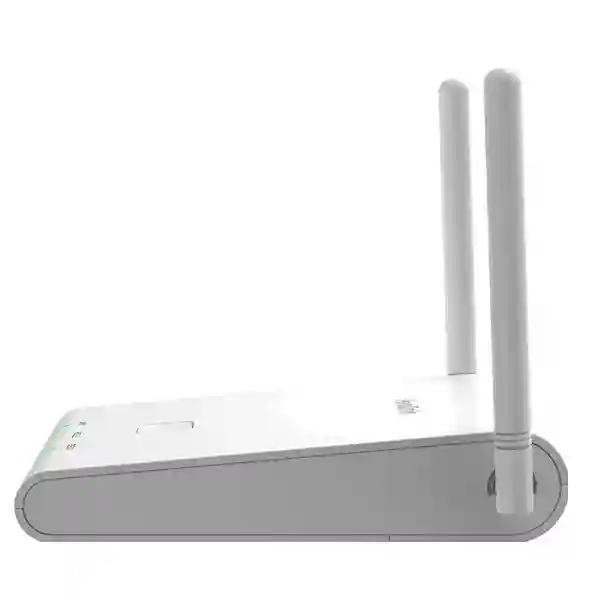
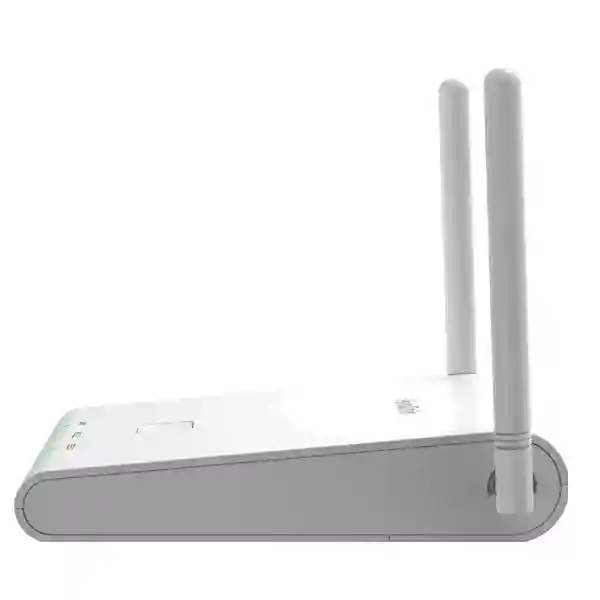
W90DM and W90B share a compact pearl-white enclosure with external antenna elements, wall-mount support and three status indicators for DECT, role and LAN/power/network state. The Ethernet interface is 10/100M because DECT voice traffic does not require a gigabit access interface; what matters more is stable LAN connectivity, correct QoS, synchronization design and power delivery. IEEE 802.3af Class 1 PoE makes distributed installation practical where compatible switches or injectors are available.
The software stack supports SIP v1/v2, SNTP/NTP, VLAN tagging and priority, LLDP, 802.1X, STUN, UDP/TCP/TLS and outbound proxy backup. Administrators can use DHCP or static addressing. Provisioning can be automated, and troubleshooting data can be exported through trace packages and system logs. These capabilities are important in managed environments because a cordless system still depends on disciplined IP network operations.
For voice quality, W90 supports G.722 wideband audio and standard G.711 variants as well as G.726, G.729/G.729A and iLBC, with optional AMR codecs documented. Voice processing features include VAD, comfort noise generation, automatic gain control, packet loss concealment and adaptive jitter buffering. Actual perceived audio quality also depends on the selected handset, WAN/PBX path, LAN congestion and codec negotiation.
Technical Specifications Ledger
| Category | Confirmed Specification | Procurement Meaning |
|---|---|---|
| Standard capacity | Up to 60 bases, 250 handsets, 250 VoIP accounts, 250 simultaneous calls | Suitable for substantial single-system estates when correctly engineered. |
| VIM capacity | Up to 10 DM, 600 bases, 2,500 handsets/accounts/calls | For very large or multi-location architecture; confirm licensing and design. |
| Per base calls | Up to 8 wideband calls / 8 narrowband calls per base; documentation notes 4 active handsets for the 8 WB figure | Capacity planning must consider busy zones, not only coverage. |
| Per handset | Up to 2 simultaneous calls | Supports common call waiting/hold workflows. |
| DECT band | 1880–1900 MHz Europe; 1920–1930 MHz US | Confirm supplied regional variant and local regulatory suitability. |
| Ethernet | 1 × RJ45 10/100M | Requires a wired network point at each DM/base location. |
| Power | IEEE 802.3af PoE Class 1; optional 5V/1.2A adapter | Check PoE budget and whether adapters are included in the quote. |
| Radio range | 30–50 m indoor; up to 300 m outdoor in ideal conditions | Survey actual premises; walls, metal and interference reduce reach. |
| Dimensions | 130 × 100 × 25.1 mm | Compact wall-mounted deployment. |
| Operating environment | -10°C to +45°C; 10–95% humidity | Validate hot, dusty, exposed or non-conditioned installation points. |
| Storage | -30°C to +70°C | Relevant to warehousing and transport controls. |
| Security | TLS, HTTPS, SRTP, digest authentication, AES configuration protection, SHA256/384/512 | Coordinate certificates and secure SIP policy with the PBX/network team. |
Specifications describe the platform ceiling and supported functions, not a guarantee that every project can operate at every maximum simultaneously under every topology. Radio capacity, codec selection, call concentration, synchronization layout, PBX limits and network design can all influence a real deployment. FourTeck recommends sizing against actual traffic and physical coverage requirements, with reserve capacity for growth and maintenance.
Configuration & Sizing Worksheet
Step 1 — Count users and simultaneous calls
Record the total number of mobile users, the expected peak number of active calls and any high-density departments. A 100-user site does not necessarily need capacity for 100 concurrent calls, but emergency, clinical, hospitality or dispatch workflows can produce unusual peaks. Identify those peaks explicitly rather than relying on a generic percentage.
Step 2 — Map physical coverage
Obtain floor plans and mark offices, corridors, stairwells, loading areas, stock aisles, courtyards and outdoor work zones. Note reinforced concrete, metal shelving, cold rooms, lifts, fire doors and other radio barriers. Manufacturer range figures should only establish a starting point. A deployment survey determines where bases can maintain both user coverage and synchronization relationships.
Step 3 — Audit Ethernet and PoE
Every planned manager or base location needs suitable Ethernet. Confirm access-switch port availability, VLAN configuration, PoE support and total PoE budget. Where PoE is not available, discuss approved injectors or the optional power adapter. Consider UPS-backed switching for locations where cordless voice must continue during short utility interruptions.
Step 4 — Define SIP/PBX integration
Document the PBX or hosted SIP service, registrar/proxy details, required transport, codecs, extension plan, authentication method, voicemail behavior and directory source. Verify platform interoperability and any provider-side endpoint restrictions before ordering a large estate.
Step 5 — Select endpoint roles
Separate ordinary office users from rugged/mobile operations, supervisors, reception teams and meeting spaces. Yealink lists compatibility across several W-series handsets plus selected CP conference endpoints and WH62/WH63 headsets. Exact compatibility can depend on firmware and system mode, so the final endpoint matrix should be validated at quotation.
Step 6 — Confirm VIM requirements
Projects exceeding the standard W90 domain, or projects deliberately designed around multiple DECT managers, should be assessed for VIM architecture and the associated entitlement. Do not assume the 2,500-device scale is available simply by adding more W90B units to a standard deployment.
Step 7 — Prepare the quote package
Provide site name and city, number of floors/buildings, approximate floor area, floor plans where available, user count, concurrent call estimate, handset preferences, PBX platform, PoE switch details, required installation services and target delivery date. This information enables a more defensible bill of materials and reduces post-order changes.
Deployment Scenarios & Industry Use Cases
Large Enterprise and Multi-Site Networks
Corporate sites often combine open offices, meeting rooms, warehouses, workshops and outdoor transition spaces. W90 can create a common cordless layer across these operational zones while keeping users attached to SIP identities. A standard system is appropriate where the site fits within its management and base limits; VIM can be evaluated where multiple DECT managers or a larger distributed estate is required. Network teams should align DECT deployment with voice VLANs, DHCP, NTP, QoS, certificate policy and monitoring procedures.
Financial and Banking Institutions
Banks may use cordless voice for facilities, operations, security coordination and back-office mobility while retaining fixed desk phones for customer-facing or controlled positions. The W90’s support for TLS/SRTP and enterprise network functions can contribute to a secure design, but institutional policy determines whether wireless voice is permitted in specific areas. Procurement should involve information-security and network teams early, document permitted coverage zones and keep provisioning credentials under controlled administration.
Educational and Campus Networks
Schools, universities and training campuses can use multi-cell DECT for maintenance, security, administration, laboratories and support staff. Campus designs should pay special attention to separate buildings, courtyards and thick masonry. Outdoor range may be useful for planning, but reliable handover between buildings requires survey validation and suitable base placement. Existing PoE switching can simplify expansion if ports and power budgets are available.
Government and Public-Sector Procurement
Public-sector projects typically require clear bills of materials, traceable model numbers, documented specifications, warranty terms and acceptance criteria. A W90 proposal should distinguish W90DM management units, W90B bases, handset models, accessories, power components, implementation services and any required VIM entitlement. For sensitive sites, deployment must also comply with the customer’s own communications, security and regulatory policies. FourTeck can prepare technical submittals around the requested scope rather than assuming a single standard bundle.
Healthcare, Hospitality and Warehousing
These environments share one requirement: people move while work continues. Nurses cross wards, hotel operations teams move between guest and service areas, and warehouse supervisors travel long aisles or loading zones. Multi-cell DECT can be a strong fit because it is purpose-built for managed voice mobility. Each environment, however, presents different radio obstacles and user behavior. Healthcare may prioritize continuity and hygiene-compatible endpoint selection; hotels may prioritize broad back-of-house reach; warehouses may need rugged handsets and careful LAN synchronization around metal stock.
Technical Deep Dive 1: Radio Capacity, Voice Processing & Cell Engineering
W90 capacity is best understood at two levels: system capacity and per-base radio capacity. The standard domain can register up to 250 handsets and support up to 250 simultaneous calls, but individual bases have their own call limits. Yealink documents up to eight narrowband calls per base and up to eight wideband calls with four active handsets noted for the wideband case. This means a base installed only for geographic coverage may not be sufficient in a concentrated calling zone. Reception back offices, nursing stations, dispatch areas or shift-change locations can require additional radio planning even when signal strength appears excellent.
Voice quality also relies on packet handling outside the DECT air interface. G.722 wideband support can provide clearer speech when the complete call path negotiates compatible audio. Adaptive jitter buffering, packet-loss concealment, gain control and related voice functions help manage normal IP voice variation, but they cannot compensate for a poorly engineered LAN or congested WAN. Business deployments should prioritize voice traffic appropriately and monitor packet loss, latency and jitter.
Technical Deep Dive 2: Software Ecosystem, Firmware Security & Operational Control
Provisioning at scale is one of the practical differences between a consumer cordless system and an enterprise platform. W90 supports multiple auto-provisioning methods, browser-based configuration and RPS/PnP workflows. Supported handset firmware can be updated over the air, reducing physical handling. Yealink also describes a low-disruption upgrade approach for several current handset families. Administrators should maintain a tested firmware baseline, schedule changes, back up configuration and validate interoperability before broad upgrades.
Security should be configured as a chain. TLS can protect SIP signaling where the PBX supports the same profile, SRTP can protect media, HTTPS can secure management/provisioning paths and AES can protect configuration files. 802.1X can participate in access control on compatible enterprise networks. None of these replaces basic operational controls such as unique credentials, certificate lifecycle management, restricted administration networks and change logging.
Technical Deep Dive 3: High Availability, Synchronization & Recovery
A multi-cell voice service has several dependency layers: the DECT manager, radio bases, Ethernet switching, PoE, IP addressing, time services and the upstream SIP platform. Resilience planning should therefore extend beyond the DECT hardware. W90 includes DECT manager backup capability in the standard multi-cell context and Level 1 base backup for synchronization. Yealink states that when a Level 1 base goes offline another base can become the backup Level 1 base, helping the system restore normal synchronization operation quickly.
For critical environments, connect relevant PoE switches and voice infrastructure to UPS power, provide redundant network paths where the design supports them, configure outbound proxy backup if the SIP service supports it, and document recovery procedures. Resilience is strongest when the radio, LAN and call-control layers are tested together. A failover feature that has never been exercised should not be treated as a guaranteed recovery plan.
Pre-Purchase Buyer Gap Checklist
Is the W90 a complete phone system by itself? No. It is the DECT multi-cell mobility layer and requires appropriate SIP/PBX service, the W90DM management role, W90B bases and compatible endpoints. The precise bill of materials depends on the project.
Does one W90B cover 50 metres indoors in every building? No. Yealink lists 30–50 metres indoors with 50 metres as an ideal distance. Concrete, metal, shelving, machinery, doors and floor slabs can reduce usable range. Surveying is important.
Can third-party DECT handsets be assumed compatible? No. Yealink explicitly states that its DECT technology is not compatible with third-party DECT base stations/handsets. Select from the supported Yealink endpoint matrix and verify firmware requirements.
Is the 2,500-handset capacity standard? No. The standard W90 multi-cell system is documented for up to 250 handsets. The larger 2,500-handset scale is associated with the optional VIM architecture and should be quoted and designed accordingly.
Are power adapters included? The manufacturer lists the external adapter as optional. PoE is supported and is generally convenient for distributed bases. Confirm exactly what is included on the FourTeck quotation.
Will existing switches work? The Ethernet link is 10/100M and PoE follows IEEE 802.3af Class 1. Existing switches still need enough ports, PoE budget and appropriate VLAN/QoS configuration. Older or unmanaged switches should be reviewed.
Can W90 replace Wi-Fi? It serves a different purpose. W90 provides DECT voice mobility for compatible endpoints. It does not replace the organization’s general Wi-Fi data network.
What about lifecycle and firmware? Confirm current handset compatibility, firmware recommendations and project support requirements at the time of quotation. Keep an approved firmware baseline and test major changes before production rollout.
What is the real project cost? Total cost includes management hardware, bases, handsets, optional accessories or power, switching capacity, survey/design, installation, configuration and support. A low base-unit price is not a meaningful comparison if it ignores the quantity needed for radio coverage.
Uganda Procurement & Delivery Logistics
FourTeck Uganda can structure W90 quotations around a defined deployment scope rather than a generic box count. For faster commercial preparation, customers should provide organization name, delivery city, user quantity, handset preferences, number of buildings/floors, existing PBX or hosted voice platform and target implementation date. Where a formal procurement process applies, include the requested quotation validity, tax documentation requirements, delivery address and any technical compliance schedule.
Order processing and delivery timing depend on confirmed stock, project quantity, regional sourcing and any special configuration requirements. For that reason, lead times should be taken from the issued quotation rather than assumed from a website listing. Large deployments may benefit from staged delivery: management and pilot equipment first, followed by the balance of bases and handsets after coverage validation.
Pre-configuration can include agreed firmware baselines, addressing/provisioning preparation and deployment documentation where included in the project scope. For installations requiring radio planning, floor plans and site access should be arranged before final base positions are committed. This reduces the risk of moving cabling or adding unplanned PoE ports after installation begins.
Local Coverage Matrix
Kampala: enterprise offices, hotels, healthcare, retail and logistics projects can be quoted with system sizing and deployment support. Entebbe: hospitality, institutional, aviation-adjacent and office environments can be scoped around building and outdoor mobility needs. Jinja: industrial, education, hospitality and commercial facilities can plan multi-cell coverage according to site geometry. Mbarara: healthcare, education, retail and regional business sites can procure W90 systems with compatible handsets and infrastructure components. Gulu: organizations can request project quotations for cordless voice mobility, with delivery and implementation scope confirmed according to location and project requirements.
Coverage in a city does not imply that every installation has identical lead time or onsite-service availability. The final quotation should state delivery assumptions, installation scope, warranty baseline and any travel or site-survey requirements.
Cross-Border & Regional Supply Chains
Organizations operating across East Africa, the Gulf and broader African markets may need consistent Yealink product families across several offices. FourTeck regional portals can support procurement conversations for Uganda, Kenya, broader African markets, UAE and Kuwait. Cross-border projects should standardize model variants, DECT frequency/regulatory suitability, handset families, firmware policy and PBX configuration while still respecting each destination’s local requirements.
Regional sourcing should also distinguish a coordinated technical standard from a single physical shipment. Taxes, customs, warranty handling, delivery terms and local support arrangements can differ by destination. Request a project-specific commercial structure for multi-country rollouts.
Related Yealink Solutions & Internal Navigation
A complete W90 project normally includes more than the manager and base stations. Explore the Yealink portfolio in Uganda for compatible communications equipment, or contact FourTeck for the current supported handset matrix. Organizations refreshing fixed extensions at the same time can review Yealink IP phones. Projects needing conference-room endpoints can review Yealink conference solutions, while headset users can explore Yealink headset options.
For the W90 specifically, procurement teams should ask about W90DM managers, W90B bases, compatible W-series handsets, supported WH-series wireless headsets, conference endpoints, PoE switching and any required VIM entitlement. Internal search links are provided as navigation aids; compatibility and current availability should be confirmed in the project quotation.
FourTeck Technical Service Capabilities
A successful multi-cell deployment begins with engineering validation. FourTeck can review the proposed bill of materials against user count, building layout, endpoint roles and infrastructure assumptions. This helps distinguish coverage-driven base quantities from capacity-driven quantities and identifies missing dependencies such as PoE ports, handset chargers or project licensing.
Where included in scope, staging can establish a controlled firmware and configuration baseline before equipment reaches site. Pre-shipment preparation may include firmware review, labeling, inventory mapping and provisioning parameters appropriate to the customer’s environment. For larger rollouts, a pilot area can validate roaming, call behavior and PBX interoperability before the remaining bases are installed.
Post-sales technical support can assist with configuration review, fault isolation and warranty coordination according to the purchased service terms. Effective troubleshooting requires visibility across the DECT, Ethernet and SIP layers, so customers should retain topology diagrams, switch-port mappings, IP details, firmware versions and relevant logs.
Extended Technical FAQ
1. What components are required for a Yealink W90 deployment?
A typical standard deployment requires a W90DM DECT Manager, one or more W90B base stations and compatible Yealink DECT endpoints. You also need Ethernet connectivity to the manager and bases, suitable power through IEEE 802.3af PoE or an approved optional adapter, and a SIP/PBX service for call control. The exact number of bases cannot be calculated from handset count alone because radio coverage and local call density matter. Large systems may additionally require the Virtual Integrator Manager architecture. Ask for a bill of materials based on floor plans, user numbers, concurrent calls and the existing voice platform.
2. How many handsets and base stations can W90 support?
Yealink documents the standard W90 multi-cell system for up to 60 base stations, 250 handsets, 250 VoIP accounts and 250 simultaneous calls. The optional VIM architecture increases the published ceiling to up to 10 DECT managers, 600 base stations, 2,500 handsets, 2,500 accounts and 2,500 simultaneous calls. Those numbers are platform limits, not a substitute for radio engineering. Each base also has per-cell call capacity, so busy areas can need additional bases even when geographic coverage appears sufficient.
3. Does W90 provide seamless roaming and call handover?
Yes, seamless handover and roaming are core W90 functions. The system supports both air and LAN synchronization, allowing a properly engineered group of cells to coordinate mobility. A user can move through overlapping coverage areas while remaining registered, and active calls can hand over between cells. Results depend on deployment quality. Poor cell overlap, interference, unsuitable base placement or unstable network connectivity can degrade roaming. A survey and validation test are recommended for warehouses, multi-floor buildings, hospitals and other complex radio environments.
4. Which handsets are compatible with the W90?
Current Yealink documentation lists multiple compatible W-series devices, including W56H, W57R, W59R, W71H, W73H, W74H and W78H, plus selected CP conference devices, DD Phone configurations and WH62/WH63 headsets. Compatibility lists can evolve with firmware and product lifecycle, and certain modes can carry exceptions. Yealink also states that its DECT technology is not compatible with third-party DECT devices. For procurement, specify the intended handset model and user role so FourTeck can validate the current supported combination before ordering.
5. Does the W90 require special licensing?
The standard system and the very large VIM architecture should not be treated as the same commercial configuration. Yealink describes VIM as an optional capability and associates the expanded 10-manager, 600-base and 2,500-endpoint scale with that architecture. Licensing and entitlement details should therefore be confirmed in the quotation for any design that depends on VIM. Separately, the customer’s SIP/PBX platform may have its own extension, device or feature licensing. A complete commercial review should identify both Yealink-side requirements and call-platform licensing before purchase.
6. Can W90 be powered entirely by PoE?
W90DM/W90B supports IEEE 802.3af Class 1 Power over Ethernet, so compatible PoE switching can deliver both network access and power over the same cable. This is usually convenient for wall-mounted bases because it avoids local mains adapters. The manufacturer also documents an external 5V/1.2A adapter as optional. Before deployment, confirm switch PoE class support, aggregate power budget, port count and UPS strategy. A switch having PoE does not automatically mean it has enough remaining power budget for every planned device.
7. How should we estimate the number of W90B bases?
Begin with floor plans and mark all areas where reliable calling is required. Then identify radio obstacles such as reinforced walls, metal shelving, elevators, machinery and floor slabs. Consider call density in addition to range. Yealink specifies approximately 30–50 metres indoors and up to 300 metres outdoors under ideal conditions, but real sites vary significantly. Bases also need suitable overlap for roaming and synchronization. The most reliable method is a deployment survey followed by validation testing. Do not purchase a base quantity simply by dividing building dimensions by the headline range figure.
8. What security features does the W90 support?
The W90 documentation includes TLS for protected signaling transport, SRTP for protected media, HTTPS for secure web/provisioning communications, digest authentication, OpenVPN, AES-encrypted configuration files and SHA256/SHA384/SHA512 support. Network functions also include 802.1X and VLAN capabilities. These features provide useful controls but require compatible configuration elsewhere in the environment. The PBX, certificate infrastructure, provisioning service and network access policy must be configured consistently. Organizations with formal security requirements should validate cipher, certificate and authentication expectations against their current policy before deployment.
9. What happens if a synchronization base fails?
Yealink documents Sync Level 1 base backup. If the Level 1 base goes offline, another suitable base can be used as the backup Level 1 base, helping the system maintain normal operation. The platform also includes DECT manager backup capability in the standard multi-cell feature set. These functions improve resilience, but an enterprise continuity plan should also consider PoE switch failure, power loss, DHCP/NTP availability, network uplinks and SIP/PBX availability. Critical deployments should test failover under controlled conditions and document the expected recovery process rather than relying only on feature descriptions.
10. How are warranty replacement and configuration support handled in Uganda?
Warranty baseline, replacement process and support scope should be taken from the FourTeck quotation and sales terms for the specific order. Keep serial numbers, invoices, configuration backups and fault evidence because these can accelerate diagnosis and warranty processing. Where FourTeck implementation or support services are included, technical teams can assist with configuration review and fault isolation according to the agreed scope. For replacement planning in critical sites, organizations may also consider holding a spare base or handset where operational downtime would be costly.
Plan Your Yealink W90 Deployment in Uganda
Request a project quotation built around your real site rather than an arbitrary bundle. Send FourTeck the number of users, floor plans or approximate coverage area, handset preferences, PBX platform, PoE switch details and delivery location. The team can help structure a W90DM/W90B and endpoint bill of materials, identify VIM requirements for larger systems, and define any requested staging or implementation services. For multi-floor, warehouse, healthcare or campus environments, include information about walls, metal storage, outdoor zones and areas with concentrated call activity so the proposed design can account for both coverage and capacity.
Commercial availability, warranty, lead time, optional accessories and implementation scope will be confirmed on the issued quotation. This approach gives procurement, network and operations teams a common technical baseline before purchase and reduces the likelihood of discovering missing infrastructure during rollout.
Reviews
There are no reviews yet.